


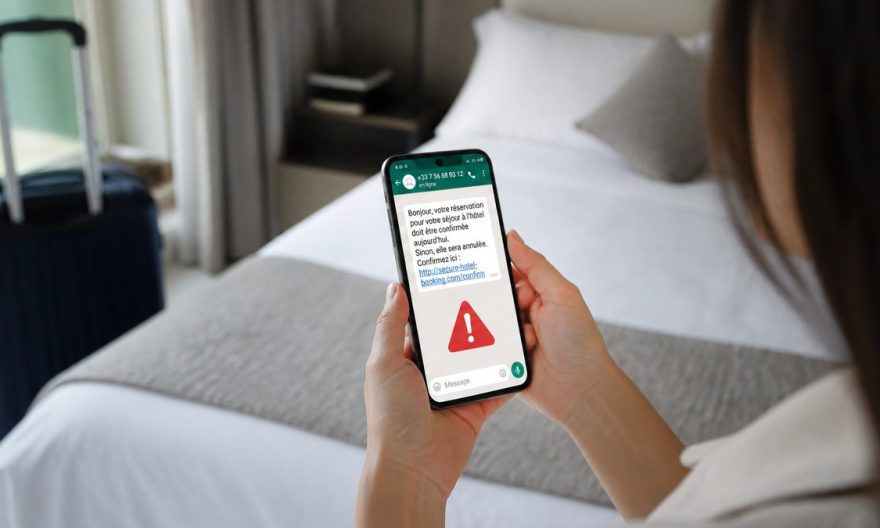
Online scams continue to evolve, becoming increasingly sophisticated and credible. A new scam on WhatsApp, targeting your hotel bookings, perfectly illustrates this trend. Find out how to protect yourself from this threat that could ruin your next vacation.
Key points to remember
- A new scam on WhatsApp targets hotel bookings using specific information.
- Scammers mimic the Booking.com site to extract bank details from victims.
- It is advisable to contact the hotel directly to verify the authenticity of communications.
Imagine the scene: you are about to go on vacation, the suitcases are ready, and suddenly, a WhatsApp message informs you that your hotel booking is about to be canceled. The message seems convincing, the dates and the name of the establishment are correct. You panic, but careful verification could save you a lot of trouble. This is exactly what the scammers hope you won’t do.
The growing threat of the 2026 WhatsApp scam
In 2026, online scams have become a global scourge, and WhatsApp is particularly vulnerable to these attacks. Users receive messages claiming to be from their hotel, informing them that their reservation is in jeopardy. These messages often include precise details, such as stay dates and the name of the establishment, to appear credible.
Un vide-dressing occasionnel rapporte rarement plus de 200 € par mois. Mais l'écart avec les vendeurs les plus performants est plus large qu'on ne le pense : 300 à 900 €/mois pour une activité régulière (2 à 5h/semaine), et 1 000 à 2 500 €+/mois pour les profils qui traitent Vinted comme un vrai canal de vente structuré. La différence ne tient ni à la chance ni à la taille du dressing de départ : elle tient presque entièrement à la méthode (algorithme, pricing, réactivité) appliquée avec régularité.
Avec 📘 Le Guide Vinted, transformez ce canal en revenu complémentaire structuré, voire en une vraie activité e-commerce.
Une méthode complète pour décoder l'algorithme, optimiser vos annonces comme une landing page, automatiser votre relance commerciale et sécuriser votre activité sur le plan fiscal.
🧠 Les 5 facteurs qui pilotent la visibilité de vos annonces (logique proche du SEO)
📈 Une méthode réplicable pour passer d'une activité occasionnelle à un revenu récurrent
⚖️ Statut, fiscalité, professionnalisation : rester en règle en montant en volume
🚫 Le chapitre que personne n'aborde ailleurs : comprendre et prévenir les blocages de compte
Scammers exploit people’s trust by using sophisticated social engineering techniques. By clicking on the link provided in the message, victims are redirected to a fake Booking.com site. This site, although appearing authentic, is designed to steal users’ banking information.
How scammers exploit personal details
Scammers rely on fraudulently obtained data to personalize their attacks. This information can come from data breaches or online searches. By having access to specific details about your travel plans, they are able to create a convincing scenario that prompts haste and panic.
It is therefore important to remain vigilant and not give in to pressure. In case of doubt, it is always better to contact the hotel directly to confirm the authenticity of any request for personal or banking information.
Preventive measures to adopt against these scams
To protect yourself, it is recommended to ignore any suspicious message or not click on unknown links. Instead, use official company phone numbers or email addresses to verify communications. Also, keep your apps and security software up to date to protect against malware.
Companies, such as Booking.com, are actively working to secure their platforms and inform users of potential risks. It is essential to stay informed about new methods used by scammers to better protect yourself.
Technological innovations to secure online hotel bookings
With the increase in scams, tech companies are investing in advanced security solutions to protect online bookings. Technologies such as two-factor authentication and artificial intelligence are being implemented to detect suspicious activities and prevent fraud before it occurs.
The rise of biometric identity verification tools also promises to strengthen the security of online transactions, making it more difficult for scammers to exploit users’ personal information.
The cybersecurity issue in the travel industry
Cybersecurity remains a major concern for the travel industry. Players like Booking.com and Airbnb are investing heavily in data protection to ensure the safety of their users. However, cybercriminals are constantly developing new tactics to bypass these defenses.
Companies must not only protect their systems but also educate their customers about potential threats. Collaboration between companies and users is crucial to creating a secure environment for everyone.
FAQ about the WhatsApp scam threatening hotel bookings
How to recognize a fraudulent message on WhatsApp regarding a hotel booking?
A suspicious message will often include a link prompting you to provide personal or banking information. Always check the sender and contact the hotel directly to confirm any request.
What to do if I clicked on a suspicious link?
If you clicked on a suspicious link, it is important to immediately change your passwords and monitor your bank accounts for any unusual activity. Also, contact your bank to report the incident.
How do hotel booking companies protect themselves against scams?
Companies invest in advanced security technologies, such as two-factor authentication and AI-based analyses, to detect and prevent fraud. They also raise awareness among their users about potential risks.
What measures can I take to protect my online bookings?
Use strong passwords, enable two-factor authentication, and never click on unverified links. Regularly check your service provider’s security alerts to stay informed about new threats.