


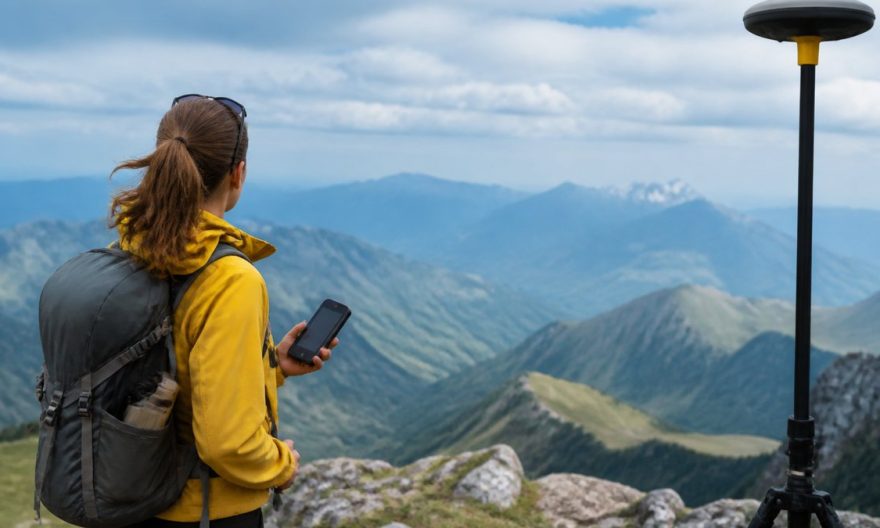
While GPS has become an indispensable everyday tool, a new positioning technology promises to revolutionize how we locate ourselves in the world. The Pulsar navigation system, developed by Xona Space Systems, boasts impressive performance that could surpass traditional GPS. Discover how this innovation could transform our daily lives.
Key Takeaways
- The Pulsar system offers 2-centimeter accuracy and a signal 100 times more powerful than GPS.
- Xona Space Systems plans to launch a constellation of over 250 satellites for global deployment.
- A certification program will ensure the compatibility of new receivers with Pulsar.
Imagine yourself inside a massive shopping mall. You’ve always relied on your GPS to guide you outside, but inside, the signal is often weak or nonexistent. With Xona Space Systems’ Pulsar system, this situation could soon be a thing of the past. Thanks to its power and precision, Pulsar promises to locate you with unprecedented accuracy, even in enclosed spaces. This is a major advancement in navigation that could change the game.
Technological Advances of Pulsar in 2023
Pulsar, developed by Xona Space Systems, stands out with a signal 100 times more powerful than traditional GPS. This increased power not only allows for better accuracy but also reliability indoors, where GPS shows its limitations. The accuracy was refined to 1.5 centimeters during the latest tests, illustrating the capabilities of this new technology.
Un vide-dressing occasionnel rapporte rarement plus de 200 € par mois. Mais l'écart avec les vendeurs les plus performants est plus large qu'on ne le pense : 300 à 900 €/mois pour une activité régulière (2 à 5h/semaine), et 1 000 à 2 500 €+/mois pour les profils qui traitent Vinted comme un vrai canal de vente structuré. La différence ne tient ni à la chance ni à la taille du dressing de départ : elle tient presque entièrement à la méthode (algorithme, pricing, réactivité) appliquée avec régularité.
Avec 📘 Le Guide Vinted, transformez ce canal en revenu complémentaire structuré, voire en une vraie activité e-commerce.
Une méthode complète pour décoder l'algorithme, optimiser vos annonces comme une landing page, automatiser votre relance commerciale et sécuriser votre activité sur le plan fiscal.
🧠 Les 5 facteurs qui pilotent la visibilité de vos annonces (logique proche du SEO)
📈 Une méthode réplicable pour passer d'une activité occasionnelle à un revenu récurrent
⚖️ Statut, fiscalité, professionnalisation : rester en règle en montant en volume
🚫 Le chapitre que personne n'aborde ailleurs : comprendre et prévenir les blocages de compte
The innovation doesn’t stop there. In terms of security, Pulsar incorporates a cryptographic authentication system that guarantees the origin of the signals. This device protects users against spoofing attempts, ensuring that the received signal indeed comes from a satellite and not a potential hostile ground source.
Xona Space Systems and Its Satellite Constellation
To realize its vision, Xona Space Systems plans to launch a constellation of over 250 satellites in low Earth orbit (LEO). This infrastructure is essential to ensure global coverage and offer a robust alternative to existing systems. The company also launched its first satellite, Pulsar-0, with a SpaceX Falcon 9 rocket, demonstrating notable improvements over GPS.
Xona’s efforts also focus on creating an ecosystem of compatible receivers. Through partnerships with major GNSS chip manufacturers, the company is paving the way for a smooth transition to LEO navigation, ensuring users have access to reliable and high-performance equipment.
Global Deployment and Beta Testing by the End of the Year
With the opening of a new spacecraft manufacturing facility, Xona Space Systems is engaging in increased vertical integration to quickly deploy its constellation. The six new satellites planned for this year mark a crucial step, allowing the launch of beta tests for this innovative positioning system.
Advances in Satellite Navigation and New Perspectives
As Xona Space Systems prepares to redefine satellite positioning, other companies are also exploring similar technologies. For example, SpaceX has invested in developing positioning systems for its Starlink users, while Amazon is working on its Kuiper project to offer global satellite internet access.
These competing initiatives highlight a growing interest in improving navigation and communication capabilities, driving a dynamic of innovation in the space sector. This competition could accelerate the adoption of new technologies, making satellite positioning more accurate and accessible.
Impacts of Satellite Navigation on Logistics and Security
Satellite navigation, constantly evolving, is transforming many sectors, including logistics and security. Companies like DHL and UPS are integrating these advances to optimize their supply chains, thus reducing delivery times and improving efficiency.
Furthermore, security forces use these technologies to enhance real-time surveillance and coordination. The adoption of more precise and reliable systems could strengthen governments’ ability to respond to crises while ensuring increased protection of critical infrastructure.
FAQ on the Pulsar Navigation System
What is the Pulsar navigation system?
Pulsar is a new navigation system developed by Xona Space Systems, offering increased accuracy and a signal one hundred times more powerful than traditional GPS.
How does Pulsar work inside buildings?
Thanks to its powerful signal, Pulsar can locate users even indoors, where traditional GPS is often ineffective.
When will the Pulsar system be available?
Although not yet operational, Xona Space Systems plans to launch beta tests by the end of the year, following the deployment of several new satellites.
What are the security advantages of Pulsar?
Pulsar incorporates a cryptographic authentication system that protects against spoofing attempts, ensuring that signals indeed come from legitimate satellites.