


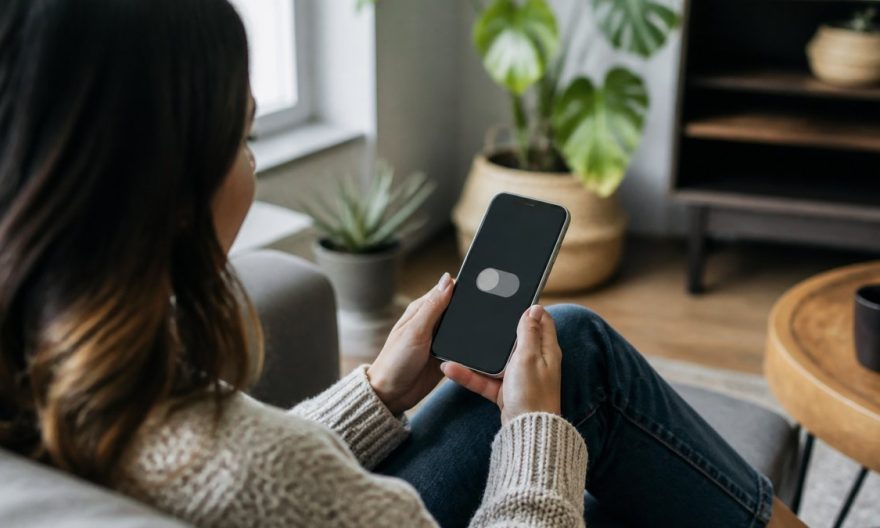
In a pioneering initiative, Australia is preparing to offer its citizens the ability to control their social media experience. Faced with increasing pressure to protect young people online, the government is considering legislative measures that could well transform digital interaction as we know it.
The essentials to remember
- The “My Feed, My Way” bill aims to give users back control of their social media news feed.
- Those under 16 will no longer be able to use personalized algorithms or infinite scrolling.
- A fine of 67.5 million euros could be imposed on platforms that do not comply with these rules.
Imagine a world where you have the freedom to decide exactly what you see on your favorite social networks. In Australia, this idea is about to become reality. The government wants to ensure that the power of choice is in your hands, especially to protect the youngest among us from the dangers of digital technology.
The “My Feed, My Way” bill in Australia
The Australian Parliament is preparing to examine the “My Feed, My Way” text before the end of the year. This initiative aims to strengthen digital protection for users, particularly minors. The legislative project provides that users will be able to switch their news feed to chronological mode, thus freeing themselves from algorithmic recommendations.
Un vide-dressing occasionnel rapporte rarement plus de 200 € par mois. Mais l'écart avec les vendeurs les plus performants est plus large qu'on ne le pense : 300 à 900 €/mois pour une activité régulière (2 à 5h/semaine), et 1 000 à 2 500 €+/mois pour les profils qui traitent Vinted comme un vrai canal de vente structuré. La différence ne tient ni à la chance ni à la taille du dressing de départ : elle tient presque entièrement à la méthode (algorithme, pricing, réactivité) appliquée avec régularité.
Avec 📘 Le Guide Vinted, transformez ce canal en revenu complémentaire structuré, voire en une vraie activité e-commerce.
Une méthode complète pour décoder l'algorithme, optimiser vos annonces comme une landing page, automatiser votre relance commerciale et sécuriser votre activité sur le plan fiscal.
🧠 Les 5 facteurs qui pilotent la visibilité de vos annonces (logique proche du SEO)
📈 Une méthode réplicable pour passer d'une activité occasionnelle à un revenu récurrent
⚖️ Statut, fiscalité, professionnalisation : rester en règle en montant en volume
🚫 Le chapitre que personne n'aborde ailleurs : comprendre et prévenir les blocages de compte
Anthony Albanese, Australian Prime Minister, emphasized that “control must return to users, not the government.” The new rules will apply to major platforms, including Facebook, Instagram, TikTok, Snapchat, and YouTube.
Increased protection for those under 16
The Australian government has also decided to ban personalized algorithms and infinite scrolling for users under 16. In case of non-compliance, the platforms concerned could face a maximum fine of 67.5 million euros. This ban aims to protect young people from harmful content, including those that encourage eating disorders, humiliate women, or glorify crime.
Anika Wells, Minister of Communications, stated that the duty of protection is not limited to social networks but extends to all digital services likely to promote compulsive use or harm self-esteem. Platforms will also need to keep a written record of the measures taken to mitigate risks and prove their effectiveness.
Reactions and opposition
The proposal has sparked diverse reactions. Chanel Contos, founder of Teach Us Consent, advocates for the algorithm to be disabled by default for all users, and only activatable upon request. She believes that less strict reforms could be easily circumvented by tech companies.
Jacqui Lambie, independent senator, also supports a strict version of the text. However, the Coalition and the Greens are still hesitant, particularly criticizing the discretion given to the minister to define new harms that could lead to sanctions.
The repercussions of increased algorithm control on social media users
This Australian bill could influence other countries to rethink their regulation of social networks. In France, a similar attempt was censored by the Constitutional Council, prompting Emmanuel Macron to seek an equivalent text from the European Commission. In the United States, Meta has already taken steps to restrict teenagers’ access to Instagram and Facebook.
Such legislation could also encourage platforms to rethink their business models. Personalized algorithms represent a significant part of their monetization strategy, and a change in these practices could require significant adjustments.
The stakes of digital protection for young people
The protection of young people online is a growing concern worldwide. Dangerous content and aggressive data collection practices have led many governments to consider stricter regulations. Tech platforms, such as TikTok and Snapchat, are often at the center of these debates due to their popularity among young people.
In parallel, digital education is becoming a priority. Schools and parents are looking for ways to equip children to navigate the digital world safely. Initiatives aimed at promoting responsible and informed use of technology are crucial to ensuring that young people can benefit from the advantages of digital technology without suffering its harms.
FAQ
Why does Australia want to disable algorithms on social networks?
Australia seeks to give control back to users and protect young people from harmful content and the adverse effects of algorithmic recommendations.
Which platforms are affected by the Australian bill?
The rules will apply notably to Facebook, Instagram, TikTok, Snapchat, and YouTube.
What are the penalties for non-compliant platforms?
Platforms that do not comply with the new rules could face a fine of up to 67.5 million euros.
How are other countries reacting to algorithm regulation?
In France, a similar initiative was censored, while in the United States, Meta agreed to restrict access to teenagers on some of its platforms.