


'/%3E%3Cpath%20fill='%23b2b2b2'%20d='M241%20382q0%2016%2017%2026%2017%2011%2042%2011t42-11q16-11%2017-26V269H241'/%3E%3Cpath%20fill='%239f7e00'%20d='M241%20379q0%2014%208%2023%209%209%2021%209%2014%200%2021-9%209-9%209-23V269h-59'/%3E%3Cpath%20d='M241%20339v-70h59v110q0%2014-9%2023l-6%205v-68h-15v72q-8%200-14-4v-68zm59%2040c0%2022%2015%2032%2029%2032%2021%200%2030-18%2030-32v-40h-59'/%3E%3Cpath%20fill='%239f7e00'%20d='M266%20277v5h2v12h-3v-5h2v-5h-9v5h2v5h-4v9h3v18h-5v10h34v-10h-5v-18h3v-9h-4v-5h2v-5h-9v5h2v5h-3v-12h2v-5zm42%20101q0%2010%206%2017%206%206%2015%207%2010-1%2016-7%206-7%206-17v-29h-43'/%3E%3Ccircle%20fill='%230044ad'%20cx='329.5'%20cy='372'%20r='6'/%3E%3Cellipse%20fill='%230044ad'%20cx='300'%20cy='340'%20rx='16'%20ry='21'/%3E%3C/svg%3E)

'/%3E%3C/g%3E%3Cuse%20href='%23c'%20transform='matrix(-1%200%200%201%20720%200)'/%3E%3C/svg%3E)
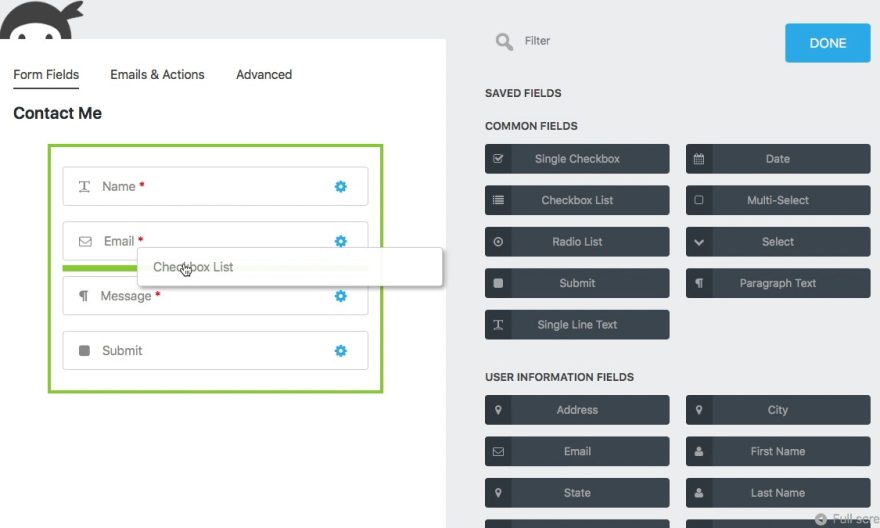
WordPress sites using the Ninja Forms plugin are under constant threat of cyberattacks. Hackers are looking to exploit a critical flaw, thus threatening thousands of sites worldwide. Discover the details of this vulnerability and the measures to take to protect your site.
Key points to remember
- Hackers launch about 3,600 intrusion attempts per day by exploiting a vulnerability in Ninja Forms.
- The flaw allows the execution of malicious PHP scripts without prior authentication, endangering approximately 90,000 installations.
- A patch is available, but many sites remain unprotected due to update delays.
Details of the security flaw
A design error in the Ninja Forms plugin, specifically in the File Upload module, was identified by researcher Sélim Lanouar. The vulnerability exploits the CVE-2026-0740 repository, allowing attackers to inject web shells and steal sensitive data without requiring authentication.
Chaque semaine, nous sélectionnons les solutions les plus utiles pour les professionnels du digital : IA, productivité, marketing, création de contenu et business. Voici les outils que nous recommandons actuellement.
☁️ pCloud – Le stockage cloud sécurisé avec une offre à vie.
Sauvegardez vos fichiers, photos et documents importants avec plusieurs centaines de Go ou plusieurs To disponibles.
→ Découvrir l'offre pCloud
🛒 Shopify – Créez votre boutique e-commerce sans coder.
Une solution complète pour lancer, gérer et développer votre activité en ligne.
→ Tester Shopify gratuitement
🤖 Jasper – L'assistant IA pour accélérer votre marketing.
Création de contenus, campagnes publicitaires et idées marketing : gagnez du temps grâce à l'intelligence artificielle.
→ Découvrir Jasper
🎬 CapCut Pro – Le montage vidéo dopé à l'IA.
Créez rapidement des vidéos professionnelles avec des outils avancés et automatisés.
→ Tester CapCut Pro
📊 HubSpot CRM – Le CRM idéal pour structurer votre croissance.
Gérez vos prospects, vos ventes et vos campagnes marketing depuis une seule plateforme.
→ Découvrir HubSpot CRM
🧠 MindManager – Organisez vos idées et vos projets efficacement.
Un outil puissant pour créer des mind maps, structurer vos stratégies et mieux collaborer.
→ Découvrir MindManager
🇬🇧 Gymglish – Améliorez votre anglais professionnel chaque jour.
Des cours personnalisés et courts pour progresser facilement, quel que soit votre niveau.
→ Profiter de l'essai gratuit
🌍 Preply – Apprenez une langue avec un professeur particulier.
Trouvez un enseignant adapté à vos objectifs et progressez à votre rythme.
→ Trouver votre professeur
Hackers take advantage of this flaw to modify upload settings and force file writing into critical server directories. By using special character sequences, they can reach the root directory, further compromising the security of attacked sites.
Consequences for site administrators
Administrators are encouraged to immediately install version 3.3.27 of Ninja Forms to mitigate the risk. However, the slowness of updates in some installations allows hackers to exploit the flaw. Cybersecurity experts, like those at Wordfence, urge enhanced monitoring of access logs to detect any suspicious activity.
Companies investing in premium plugins hope for enhanced security, but this proprietary model often limits independent code review. Unlike the WordPress core, these add-ons do not benefit from continuous community vigilance, which can leave doors open to cybercriminals.
Recommendations for effective protection
Limiting the number of third-party modules can reduce the potential attack surface. Site managers must remain vigilant in the face of increasing malicious requests targeting their contact forms. Even with hosts blocking thousands of suspicious connections every hour, hackers persist in finding new vulnerable targets.
Experts also recommend keeping a technological watch on official patches, as hackers often analyze these updates to identify weaknesses in outdated versions.
Cybersecurity and monitoring of WordPress websites
In 2026, website security remains a major priority for administrators. Implementing proactive measures such as continuous monitoring, regular plugin updates, and using robust security solutions is essential to protect online data and infrastructures. Vigilance and education in cybersecurity are key to countering the persistent threats posed by cybercriminals.