


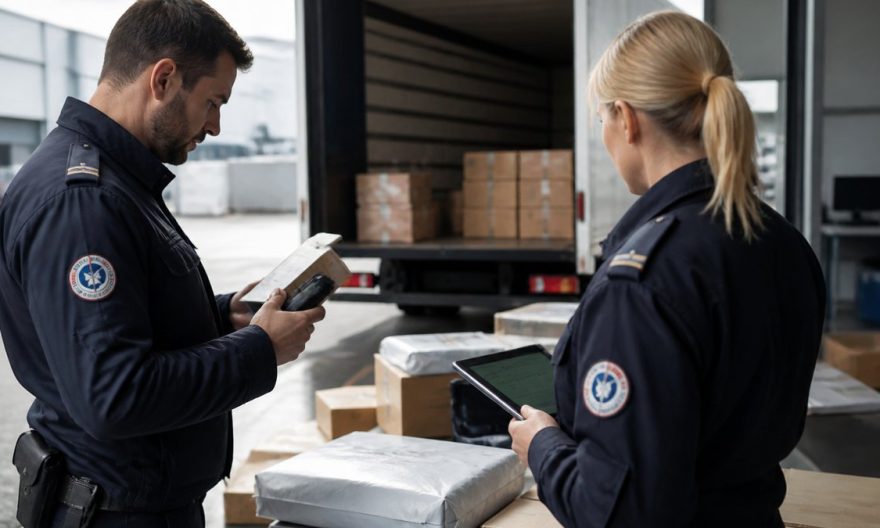
E-commerce has become an integral part of the shopping habits of the French, but with this growing popularity come increased risks related to dangerous or counterfeit products. It is in this context that Customs and the DGCCRF have signed a new agreement, strengthening their cooperation to better protect consumers and law-abiding businesses.
The essentials to remember
- Customs and the DGCCRF have signed an agreement to strengthen the fight against e-commerce fraud.
- The protocol clarifies the role of each entity, allowing for faster action against non-compliant products.
- New digital tools and joint training of agents will facilitate the exchange of information.
Imagine yourself browsing your favorite e-commerce platform, looking for the ideal product. Behind every click, thousands of offers try to capture your attention. But how can you be sure that what you are buying is safe and compliant? It is precisely to answer this question that Customs and the DGCCRF have decided to collaborate more closely.
New agreement signed on September 14, 2026
Chaque semaine, nous sélectionnons les solutions les plus utiles pour les professionnels du digital : IA, productivité, marketing, création de contenu et business. Voici les outils que nous recommandons actuellement.
☁️ pCloud – Le stockage cloud sécurisé avec une offre à vie.
Sauvegardez vos fichiers, photos et documents importants avec plusieurs centaines de Go ou plusieurs To disponibles.
→ Découvrir l'offre pCloud
🛒 Shopify – Créez votre boutique e-commerce sans coder.
Une solution complète pour lancer, gérer et développer votre activité en ligne.
→ Tester Shopify gratuitement
🤖 Jasper – L'assistant IA pour accélérer votre marketing.
Création de contenus, campagnes publicitaires et idées marketing : gagnez du temps grâce à l'intelligence artificielle.
→ Découvrir Jasper
🎬 CapCut Pro – Le montage vidéo dopé à l'IA.
Créez rapidement des vidéos professionnelles avec des outils avancés et automatisés.
→ Tester CapCut Pro
📊 HubSpot CRM – Le CRM idéal pour structurer votre croissance.
Gérez vos prospects, vos ventes et vos campagnes marketing depuis une seule plateforme.
→ Découvrir HubSpot CRM
🧠 MindManager – Organisez vos idées et vos projets efficacement.
Un outil puissant pour créer des mind maps, structurer vos stratégies et mieux collaborer.
→ Découvrir MindManager
🇬🇧 Gymglish – Améliorez votre anglais professionnel chaque jour.
Des cours personnalisés et courts pour progresser facilement, quel que soit votre niveau.
→ Profiter de l'essai gratuit
🌍 Preply – Apprenez une langue avec un professeur particulier.
Trouvez un enseignant adapté à vos objectifs et progressez à votre rythme.
→ Trouver votre professeur
Customs and the DGCCRF officially strengthened their partnership on September 14, 2026. This new agreement aims to modernize a collaboration that dates back to 2017, in response to the rapid evolution of online commerce. The two entities wish to more effectively detect dangerous or counterfeit products circulating in the French market.
Their common goal is to protect consumers and ensure fair competition for businesses that follow the rules. By sharing their unique skills, Customs and the DGCCRF hope to identify problematic products more quickly and remove them from the market.
Shared training and digital tools
One of the main focuses of this new agreement is the joint training of agents from both administrations. By better understanding each other’s methods and missions, Customs and the DGCCRF will be able to coordinate their actions more effectively. It is a collaborative approach that should streamline the sharing of information.
Furthermore, shared digital tools will be deployed to facilitate the exchange of crucial data regarding online commerce. These tools will allow for quicker identification of suspicious sellers or already reported products, thus accelerating the removal of dubious offers.
Preparation for the European Customs Union reform
The agreement anticipates a major reform of the European Customs Union, which could change the rules for products purchased outside the European Union. This overhaul of the rules will be essential for managing the importation of small parcels, a growing challenge with the expansion of e-commerce.
The DGCCRF will be consulted to identify relevant information to share with Customs, thus ensuring better coordination in the face of new regulatory requirements. This effort aims to ensure that businesses comply with sustainability and pollution standards while leveling the playing field for all market players.
Impact of new ecodesign standards on e-commerce
With an increasing focus on ecodesign, products must now meet stricter sustainability criteria. This has direct implications for the e-commerce sector, where non-compliant products will need to be identified and removed more quickly to comply with new standards.
The European Union is pushing for more sustainable products, which could transform how online commerce platforms operate. Businesses will need to adapt to these new requirements to avoid potential sanctions and remain competitive in the market.
The challenges of product safety in global e-commerce
Product safety has become a priority in global e-commerce, especially with the rise of platforms like Alibaba and Amazon. These giants must navigate a complex landscape of international regulations to ensure that the products they offer are safe and compliant.
Initiatives like those of Customs and the DGCCRF in France show that governments are taking steps to tighten controls. However, international cooperation remains essential to address large-scale product safety challenges, particularly in the face of diverse legislation and business practices.
FAQ on Customs-DGCCRF cooperation
What are the main missions of Customs and the DGCCRF?
Customs controls products crossing borders, while the DGCCRF monitors their compliance once on the French market.
How does this agreement improve the fight against e-commerce fraud?
It clarifies roles and facilitates the exchange of information to identify and remove dangerous or counterfeit products more quickly.
What are the benefits of shared digital tools between the two administrations?
They allow for better communication and more efficient data exchange, helping to identify non-compliant products.
How will the European Customs Union reform affect e-commerce?
It could change the rules for imported products, adding new compliance requirements for online commerce platforms.